Best Cookware Comparison: 15 Powerful Insights to Choose the Right Cookware Set
Choosing the right pots and pans can feel overwhelming, especially with so many materials, brands, and performance claims. This best cookware comparison guide gives you a professional, easy-to-understand breakdown so you can confidently select cookware that matches your cooking style, budget, and long-term needs.
We compare major cookware categories, key materials, set styles, heat performance, durability, and price levels — all in one place — so you don’t waste money on pieces that won’t perform in your kitchen.
Cookware Comparison – Quick Navigation
Jump to the section you care about most.
- Why a cookware comparison matters
- Major cookware categories compared
- Cookware materials comparison
- Cookware sets compared (brand-agnostic)
- Best cookware by cooking style
- Heat conductivity comparison
- Durability & maintenance comparison
- Cooktop compatibility comparison
- Price comparison guide
- FAQ
- Conclusion
Why a Cookware Comparison Matters
Good cookware improves almost every part of cooking. The right pans give you consistent heat, better browning, and more control, while the wrong ones can cause burning, sticking, and frustration.
With a thoughtful cookware comparison, you can improve:
- Heat consistency across the cooking surface.
- Browning quality for meats and vegetables.
- Overall cooking speed and responsiveness.
- Flavor development and sauce reduction.
- Longevity, safety, and value for money.
A smart comparison ensures your investment doesn’t just look good on the shelf — it performs every day on your stove and in your oven.
Major Cookware Categories Compared
Before diving into materials, it helps to look at the cookware categories you’ll actually use every week. These are the pieces where performance differences matter most.
Fry Pans / Skillets
Fry pans and skillets are often used daily, so this is where you feel the biggest difference between materials.
- Stainless steel: best for searing and sautéing; creates excellent fond for sauces.
- Nonstick: best for eggs, pancakes, and delicate proteins that tear easily.
- Carbon steel: best for high-heat browning when you want chef-style results.
Dutch Ovens
Dutch ovens are heavy-duty pots designed for slow, even cooking and oven use.
- Cast iron: superior heat retention once preheated; ideal for braises and stews.
- Enameled cast iron: easier maintenance and non-reactive with acidic ingredients.
Stockpots
Stockpots handle soups, stews, boiling pasta, and large-batch cooking. Here, stainless steel usually wins.
- Stainless steel stockpots: durable, relatively light, and often compatible with all cooktops.
- Aluminum-based designs can heat faster but may be less durable over many years.
Cookware Materials Comparison
Different materials behave differently on the stove. Some are fast and responsive, others are slower but hold heat for a long time. Understanding these differences helps you decide which mix belongs in your kitchen.
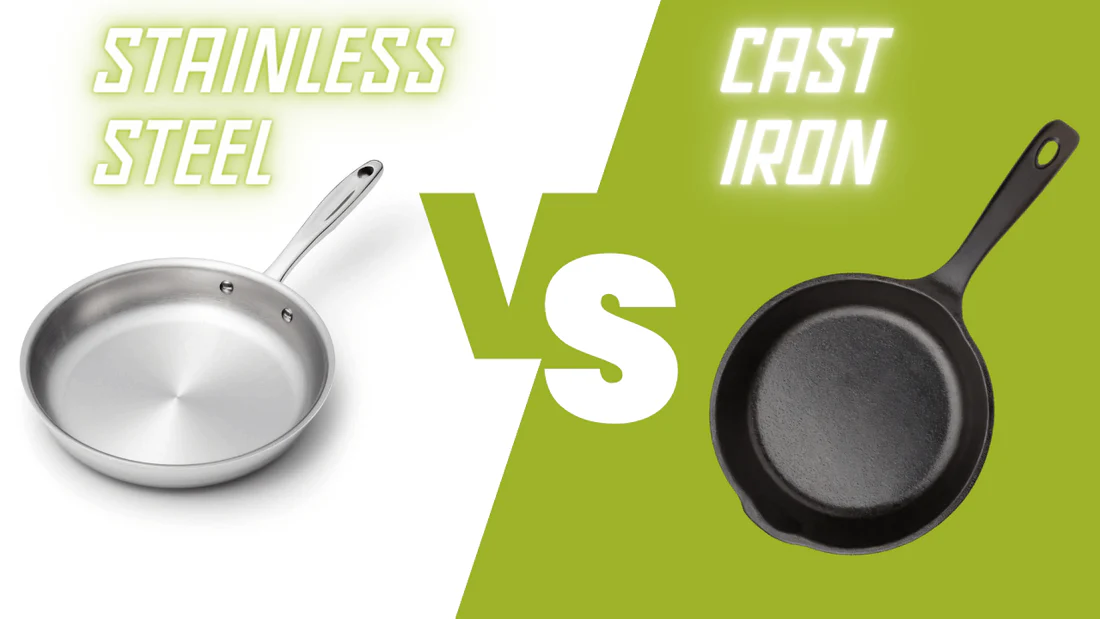
Stainless Steel
Pros:
- Extremely durable and resistant to rust.
- Oven-safe and typically safe with metal utensils.
- Non-reactive with acidic foods.
- Excellent for browning and building flavour.
Cons:
- Requires a bit of technique to prevent sticking.
- Heat distribution depends heavily on the core construction.
Best for: everyday cooking, professionals, and households with diverse recipes.
Cast Iron
Pros:
- Unmatched heat retention for steady, even cooking.
- Amazing browning and crust formation on meats and breads.
- Can last for decades, even generations.
Cons:
- Heavy to lift, especially when full.
- Needs seasoning and careful drying.
- Reactive with acidic foods if not enameled.
Best for: steaks, cornbread, frying, baking, and rustic one-pot dishes.
Carbon Steel
Pros:
- Lighter alternative to cast iron with similar performance.
- Develops a natural nonstick surface over time.
- Excellent for high-heat searing and wok-style cooking.
Cons:
- Requires seasoning and proper drying to avoid rust.
- Develops patina/discoloration (normal, but not “perfect” looking).
Best for: searing, stir-fries, and restaurant-level performance at home.
Copper
Pros:
- Best-in-class thermal precision and responsiveness.
- Heats and cools very quickly for fine control.
- Preferred for sauces and temperature-sensitive cooking.
Cons:
- More expensive than most other materials.
- Requires polishing to maintain its shine.
- Usually needs a stainless interior lining for safety.
Best for: precise cooking, advanced home cooks, and professional kitchens.
Nonstick
Pros:
- Effortless food release and easy cleanup.
- Great for eggs, pancakes, and delicate foods.
- Allows low-oil cooking for lighter meals.
Cons:
- Shorter lifespan compared with bare metal pans.
- Not suitable for very high heat.
- Requires gentle utensils to protect the coating.
Best for: beginner cooks, quick breakfasts, and low-maintenance cooking.
Best Cookware Sets Compared (Brand-Agnostic)
Instead of focusing on specific brands, this comparison looks at how different set types behave in real kitchens. This helps you choose a set style that fits your habits, no matter which brand you prefer.
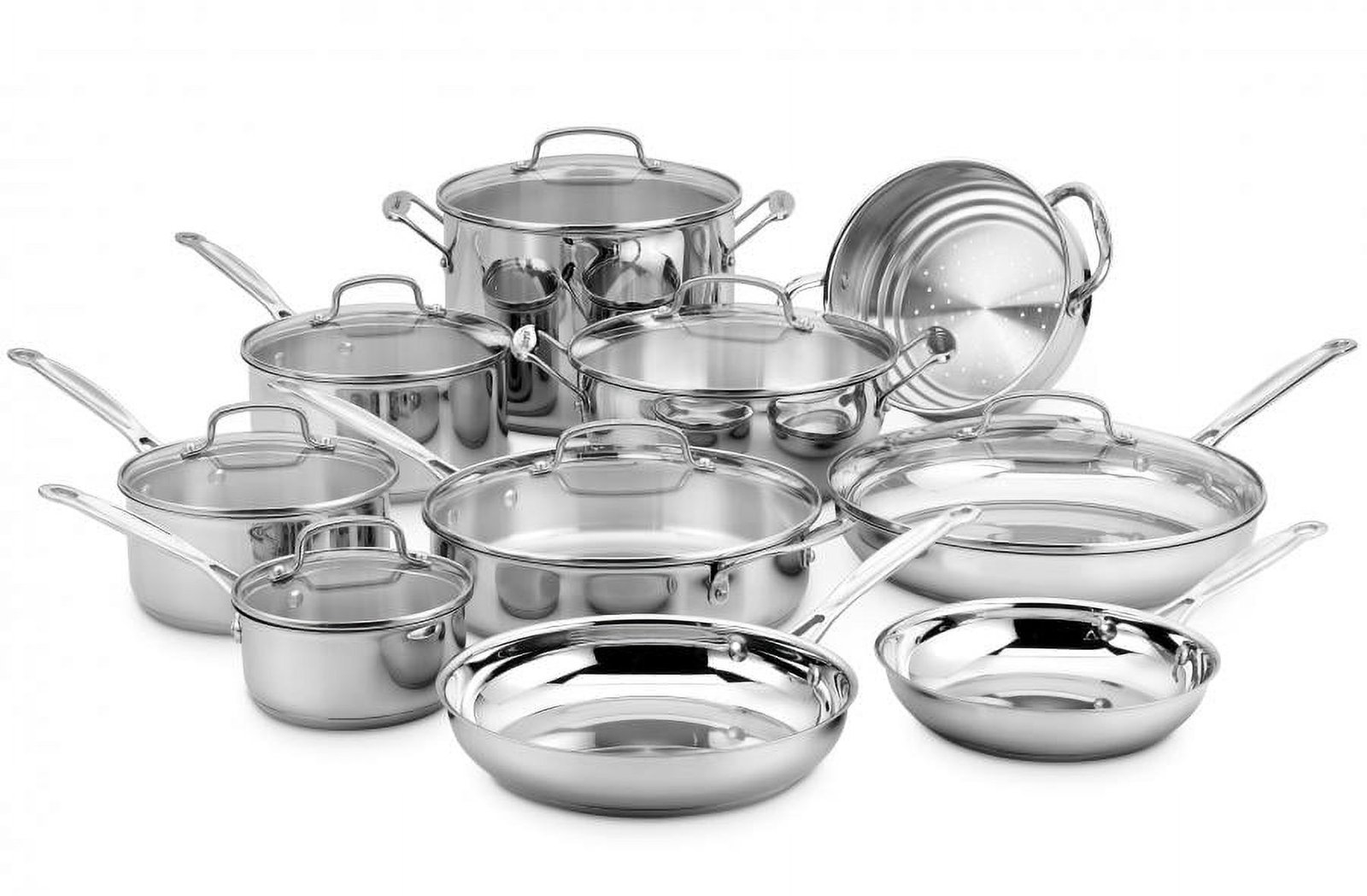
Multi-Clad Stainless Steel Sets
Multi-clad stainless steel combines layers of steel and aluminum (or copper) for better heat distribution and control.
- Pros: durable, induction-ready, oven-safe, and versatile for nearly every recipe.
- Cons: typically pricier than simple aluminum or single-ply steel.
- Best for: serious home cooks who want one core set that can handle almost everything.
Ceramic Nonstick Sets
Ceramic nonstick sets are often marketed as “cleaner” alternatives to traditional nonstick coatings.
- Pros: easy to clean, lightweight, often stylish.
- Cons: nonstick performance may fade sooner; not ideal for very high heat.
- Best for: low-oil cooking and simple, quick cleanup.
Hard-Anodized Aluminum Sets
Hard-anodized aluminum offers good heat performance at a more accessible price point, often with a tougher surface.
- Pros: affordable, heats quickly, lighter than steel sets.
- Cons: may not last like premium multi-clad stainless; induction compatibility varies.
- Best for: budget-minded buyers who still want solid everyday performance.
Best Cookware by Cooking Style
There is no single “best cookware” for everyone. The ideal choice depends on how you cook and what matters most in your kitchen.
| Cooking Style | Best Choice | Why |
|---|---|---|
| Beginners | Nonstick + basic stainless | Easy learning curve, forgiving surface, and practical flexibility for everyday meals. |
| Professionals / Advanced Home Cooks | Carbon steel + multi-clad stainless | High-heat capability, durability, and strong performance across techniques. |
| High-Heat Cooking | Carbon steel or cast iron | Handles extreme temperatures and delivers deep browning without warping. |
| Budget Buyers | Hard-anodized aluminum | Affordable performance with good heat response and lighter pans. |
| Health-Focused Cooks | Ceramic nonstick (plus stainless for searing) | Low-oil cooking and easy release, while stainless covers higher-heat tasks. |
| Baking & Braising | Enameled cast iron | Oven-safe, heavy-duty construction for braises, stews, and rustic breads. |
Heat Conductivity Comparison Table
Heat conductivity and responsiveness describe how fast and evenly a pan reacts to your burner setting. This is crucial for sauces, searing, and avoiding hot spots.
| Material | Heat Conductivity | Responsiveness |
|---|---|---|
| Copper | ★★★★★ | ★★★★★ |
| Aluminum | ★★★★☆ | ★★★★☆ |
| Carbon Steel | ★★★☆☆ | ★★★☆☆ |
| Cast Iron | ★★★☆☆ | ★★☆☆☆ |
| Stainless Steel (single-layer) | ★★☆☆☆ | ★★★☆☆ |
Multi-clad stainless steel improves performance by adding an aluminum or copper core to compensate for stainless steel’s lower natural conductivity.
Durability & Maintenance Comparison
Cookware is a long-term investment. Some materials can last for generations with minimal care, while others trade longevity for convenience.
| Material | Durability | Maintenance Level |
|---|---|---|
| Stainless Steel | Very High | Low |
| Cast Iron | Extremely High | Medium (seasoning needed) |
| Carbon Steel | Very High | Medium (seasoning and drying) |
| Copper | High | High (polishing and care) |
| Nonstick | Medium | Low (but replace periodically) |
If your goal is “buy once, keep for years,” stainless steel, cast iron, and carbon steel should make up most of your collection, with nonstick reserved for specific tasks.
Cooktop Compatibility Comparison
Not every pan works on every stove. This table helps you avoid compatibility surprises — especially if you may switch to induction in the future.
| Material | Gas | Electric | Induction |
|---|---|---|---|
| Stainless Steel (magnetic base) | ✔ | ✔ | ✔ |
| Cast Iron | ✔ | ✔ | ✔ |
| Carbon Steel | ✔ | ✔ | ✔ |
| Copper (without induction disc) | ✔ | ✔ | ✘ |
| Nonstick (depends on base) | ✔ | ✔ | Depends (magnetic base needed) |
Induction tip: if a magnet sticks strongly to the base, the pan is induction-ready.
Price Comparison Guide
Exact prices change across stores and regions, but this guide summarises what you typically get at each budget level when shopping for cookware sets.
| Price Tier | What You Get |
|---|---|
| Entry Level (≈ $80–$200) | Basic nonstick or aluminum sets; good for small households and lighter cooking. |
| Mid-Range (≈ $200–$500) | Multi-clad stainless sets, stronger ceramic nonstick options, and improved durability. |
| Professional (≈ $500–$1,500+) | Copper, premium multi-clad stainless, and high-end enameled cast iron designed for heavy use. |
If you want deeper cookware science, focus on reputable cooking resources that test materials and pans with consistent methods.
Best Cookware Comparison – Frequently Asked Questions
Quick answers to the most common questions people ask when comparing cookware sets.
1. What is the best cookware material overall?
For most kitchens, stainless steel is the best overall choice. It’s versatile, durable, non-reactive, and oven-safe. Pair it with one cast-iron pan and one nonstick pan and you can handle almost any recipe.
2. Does copper cookware really make a difference?
Yes. Copper offers excellent thermal precision for sauces and temperature-sensitive cooking, but it’s more expensive and typically requires more care.
3. Which cookware lasts the longest?
Cast iron and stainless steel are the longevity leaders. With proper care, they can last for decades and even be passed down.
4. Is nonstick cookware safe?
Modern nonstick pans with PFOA-free coatings are safe when used correctly. Keep heat at low to medium, avoid overheating empty pans, and use soft utensils to protect the surface.
5. Should I buy a full cookware set or mix materials?
Many cooks prefer a mixed approach: a stainless-steel core set for everyday tasks, plus one nonstick skillet and one cast-iron or carbon steel pan for high-heat and oven work.
6. What’s the best cookware combination for beginners?
A simple starter setup is: one nonstick skillet, one stainless pot, and one cast-iron or carbon steel pan. This gives you easy cooking, reliable boiling/sauces, and strong searing performance.